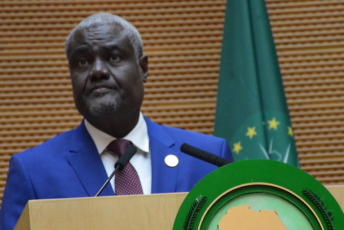
On 14 May 2026, the African Union Commission Chairperson, H.E. Mahmoud Ali Youssouf, appointed former Nigerian President Olusegun Obasanjo to support AU peace efforts in the Horn of Africa, less than two months after appointing former Tanzanian President Jakaya Kikwete as AU High Representative for the Horn of Africa and the Red Sea on 25 March 2026. Two high-profile appointments in eight weeks. Two mandates have yet to be clearly delineated. These appointments raise urgent questions. Are these mandates complementary or overlapping? Does Obasanjo's appointment replace or supersede Kikwete’s appointment? If, as some argue, the Obasanjo appointment is specifically targeted at de-escalating military mobilisation in Ethiopia and Tigray, what is the justification for a new appointment rather than recalling the existing mediators, former Kenyan President Uhuru Kenyatta and former South African Deputy President Phumzile Mlambo-Ngcuka? But these institutional questions, important as they are, must not distract from the far more pressing and urgent issue at hand: the catastrophic failure to implement the Pretoria Agreement.
The appointments came at a time when the Horn of Africa is hurtling toward the precipice of renewed war.
Well over three years after the Cessation of Hostilities Agreement (the Pretoria Agreement) between the Government of Ethiopia (GoE) and the Tigray People's Liberation Front (TPLF) was signed on 2 November 2022, the promise of peace remains largely unfulfilled. An agreement that ended the war that claimed an estimated 319,000 direct battlefield deaths, 61% of African conflict fatalities during the period, and over 600,000 lives, including indirect deaths from starvation and disease, the deadliest globally since the Rwandan genocide of 1994, has met systematic non-implementation, impunity, and institutional neglect.
Image: WikiMedia Commons
 Download