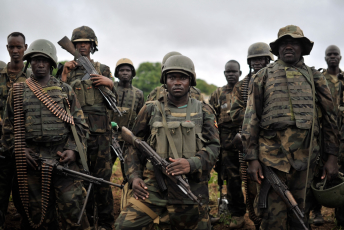
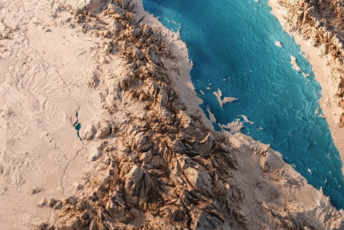
The Red Sea is back. But the old rules that governed this vital global waterway are gone, replaced by a volatile and crowded landscape of both old and new actors. The region’s future is no longer being decided by the distant chess moves of great powers; it is being shaped, right now, by the assertive and competing interests of regional middle powers. Middle Eastern countries (MECs), such as the United Arab Emirates, Saudi Arabia, Türkiye, and Qatar are not waiting for permission. They are actively rewriting the security and political map of the Red Sea and the Horn of Africa (HoA) with a mix of money, diplomacy, and direct military and other forms of intervention. At the same time, the HoA is no longer a passive recipient of MECs’ engagement. Its governments, elites, and local actors have learned to navigate and exploit MECs’ ambitions, using external competition to bolster domestic legitimacy, attract investment, and diversify partnerships.
About
THE MIDDLE EAST COUNCIL ON GLOBAL AFFAIRS
The Middle East Council on Global Affairs (ME Council) is an independent, non-profit policy research institution based in Doha, Qatar. The ME Council produces policy-relevant research, convenes meetings and dialogues, and engages policy actors on geopolitical and socioeconomic issues facing the Middle East and North Africa (MENA) region. The ME Council serves as a bridge between the MENA region and the rest of the world, providing a regional perspective on global policy issues and establishing partnerships with other leading research centers and development organizations across the MENA region and the world.
THE MEDITERRANEAN PLATFORM
Mediterranean Platform is a research and dialogue initiative that provides an inclusive space for collective reflection and action toward positive change in the wider Mediterranean region. Through a focus on geopolitics and geoeconomics, socio-political dynamics, environment, and culture, it connects researchers, practitioners, and civic actors from across the region
THE PAN AFRICAN AGENDA INSTITUTE
The Pan African Agenda Institute (PAAI) is a deliberative platform and think tank on the Pan-African agenda, enabling Africa to realize a dynamic, peaceful, prosperous, and integrated future. Its priority thematic areas include: Governance, Peace and security, Geopolitics and multilateralism, and Human development.
 Download